
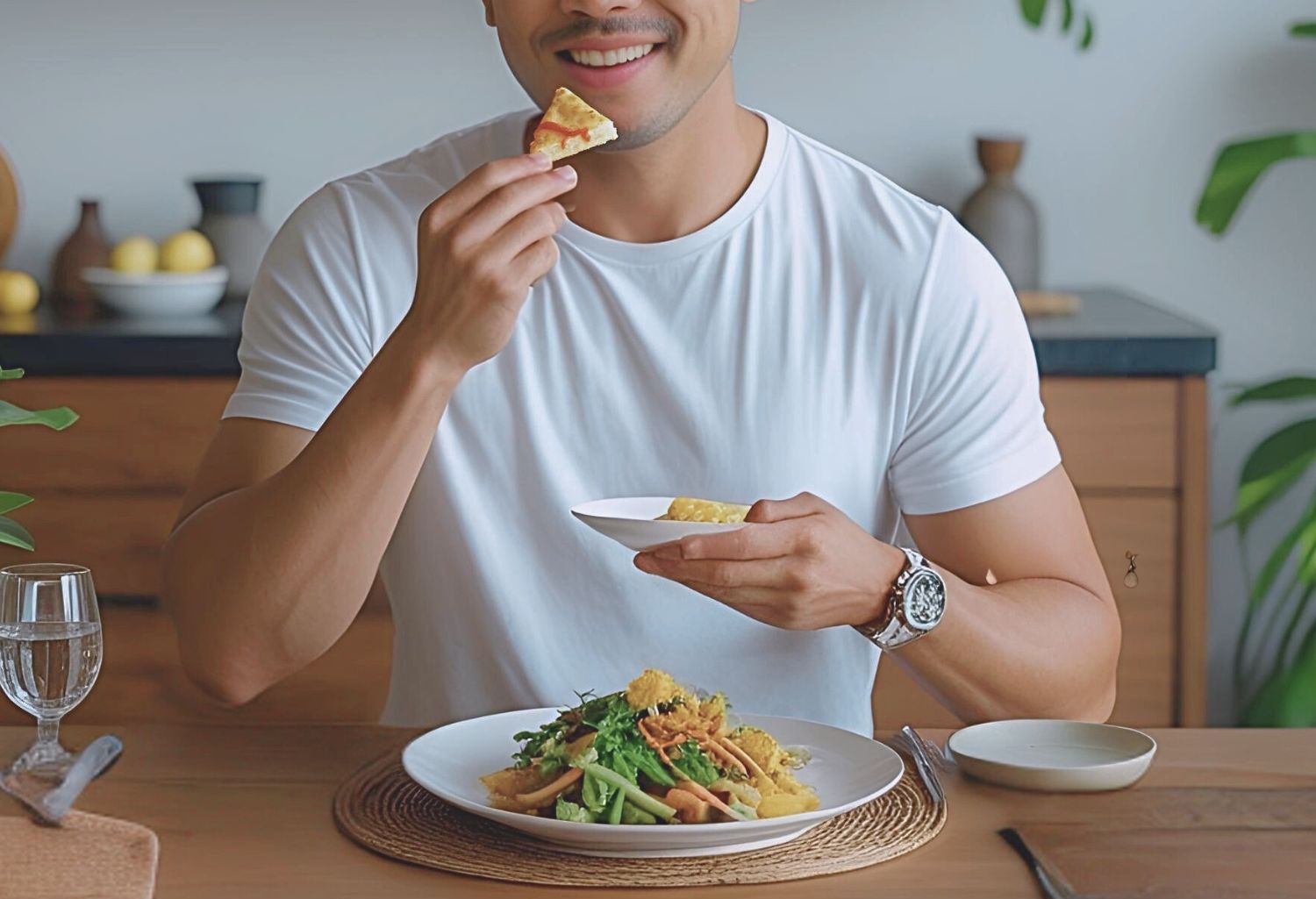
If you’re reading this while shoving a cold empanada into your mouth with one hand and typing emails with the other, take a time out. Put the fork down, give yourself a minute, and let’s talk.
Because this post isn’t just about food. This is about how you show up for yourself, 2-3 times a day. (Four, kung may merienda. And I hope you do.)
You might be one of those people who’s started to forget what it’s like to be present when eating. To savor. To delight. To sit the heck down and just… enjoy.
When was the last time you had a meal where you weren’t rushing? No emails. No Netflix humming in the background. No doomscrolling TikTok. Just you and your food. Quiet. Present. Can’t remember? Exactly.
We’re so conditioned to multitask and “make use” of every second that even mealtimes have become another item on a checklist.
“Lunch: done.”
Not: “Lunch: enjoyed.”
My friend. You deserve better.
The case for enjoying eating
There’s a reason we gather over meals, celebrate over handaans, and keep memories tied to the food our moms made. Eating is foundational, not just functional. It says “I’m alive.” It says “I deserve to feel good.”
And when done mindfully, it says something else too: “I’m here. Fully. In this moment.”
But the sad part is that we often aren’t here. Not really.
We’re inhaling, not tasting. Nibbling, not nourishing. And the result? Constant fatigue. Digestive issues. Emotional eating. That lowkey guilt that creeps in after every meal.
READ: Mindfulness for Every Juan: A Guide to Being Present
That’s what happens when you ghost your plate. The food may go in, but your mind is nowhere to be found.
So today, let’s make a better choice.. Not with quinoa (unless you like quinoa). But with presence. With pleasure. With the sacred, sometimes sticky, sometimes crispy, always joyful act of learning how to savor every bite.
Why mindful eating works
Let’s ground this in something real. This isn’t just another #aesthetic wellness trend.
When you eat slowly and attentively, you give your brain time to register fullness. This typically takes around 20 minutes. If you rush, your body doesn’t get the signal in time; so you overeat, feel bloated, and wonder what just happened.
You also switch you nervous system from sympathetic (fight-or-flight mode) to parasympathetic (rest-and-digest mode). This promotes better digestion, improved nutrient absorption, and even mood regulation.
Think of it as meditation, but instead of emptying your mind, you’re just watching it as you eat.
Thoughts float in: “Did I pay Meralco?” You return to the bite. Thoughts float out. Repeat.
And when you log what you eat and how it made you feel (not to track calories but to track connection) you begin to understand what nourishes you… and what numbs you.
How to actually enjoy eating
Here’s where the good stuff begins. A mindful meal doesn’t have to be elaborate. It just has to be intentional.
1. Set up your plate
Even if it’s tinapa and rice or a fast-food dinner, put it on a real plate. Use cutlery that doesn’t feel like it came from a gas station giveaway. Sit at a table, even if it’s just the end of your bed. Light a candle even. Drop an ice cube in your water. Small rituals can make a big difference.
2. No screens at the table
Challenge yourself: pick one meal a day, where there are no gadgets in sight Just you and your ulam. The first time might feel awkward. The second time feels intentional. By the third? You’re actually tasting again.
3. Chew like you mean it
Aim to chew at least 20 times per bite. Sounds OA, but it works. You’ll slow down and suddenly, textures unfold. Swear, even your Jollibee burger kind of tastes gourmet when you actually pay attention.
4. Check in mid-meal
Halfway through, pause. Ask yourself: Am I still hungry? Do I want more? Is this still enjoyable? Eat to fulfill, not just to finish.
5. Track emotions, not calories
If you’re not in need of a calorie tracker, try a feelings log instead. After each meal, jot down: Did that nourish me? Did I like it? Did it make me sluggish or satisfied? This simple act builds emotional awareness around food with no guilt attached.
READ: A Practical Guide to Sticking to Your Diet (Pinas Edition)
When eating mindfully feels hard
More often than not, you probably eat mindlessly when you’re:
- always rushing. If you’ve got 15 minutes between meetings, your lunch becomes whatever’s nearest. It’s survival, not celebration.
- always online. You scroll while spooning rice into your mouth. You don’t even see your food, let alone taste it
- eating to cope. Stress? Food. Boredom? Food. Sadness? Ice cream with a side of regret. Comfort food becomes a default button when we’re just trying to feel something.
- losing connection to hunger cues. You eat at 12 noon not because that’s what the clock says, not because your body asked for it. Gut says no, brain says go.
While these aren’t character flaws, they are symptoms of a world that values productivity over presence. A culture where taking your sweet time with lunch is almost seen as a luxury – or worse, laziness.
But the moment you notice it? That’s the crack in the autopilot. That’s where change can begin.
READ: 7 Simple Tips to Live a Happy & Healthy Life
So if you’ve ever said these things to yourself, here’s how to respond with more kindness, more intention, and yes, more flavor.
Scenario 1: “I get home late and just eat in front of the TV.”
Totally understandable. You’re tired. You want to shut down. And eating becomes background noise while Netflix does the heavy lifting.
But you can still reclaim the moment.
Prep something comforting ahead. Doesn’t have to be complicated. Kahit mechado na leftovers with rice in a proper bowl. Dim the lights and put on a lo-fi jazz playlist. Even if you’re propped up on the couch, you can still make it a vibe, not a detached habit.
Scenario 2: “I always overeat at buffets.”
Buffets can feel like a trap, di ba? All that food. All that pressure to “get your money’s worth.” But friend, the buffet isn’t the problem. It’s the rush.
So do this: before you even grab a plate, do a full walk-around. Get the lay of the land. Make mental notes of what’s worth your appetite. Then start with small portions. Focus on tasting and enjoying, not demolishing and punishing your digestive tract. And chew slowly; the buffet isn’t going anywhere.
Scenario 3: “I hate eating alone.”
This one hits different, especially in a culture that loves shared meals. But let’s reframe that for you:
Eat with your senses. Or your journal. Or a view. You’re not alone if you’re with yourself.
You are a whole universe! You are worthy of your own company. And here’s a not-so-secret: most people around you? They’re too caught up in their own worlds to care if you’re dining solo.
READ: You’re Not Late: What Being Single at 30 in the PH Really Looks Like
Finally, cravings satisfied
Here’s a thought: sometimes we’re not actually craving food. We’re craving comfort. Care. Control.
You know what eating slowly gives you? All of that.
It says: This moment matters.
It says: I deserve pleasure that doesn’t hurt me after.
It says: I am here, and I’m allowed to enjoy.
You are allowed to treat food not just as fuel, but as a love letter to yourself.
So try one mindful meal this week.
Choose something nostalgic or comforting to you. Turn off the noise. Tune in to yourself. And savor every bite; not just to enjoy food, but to enjoy yourself.


