

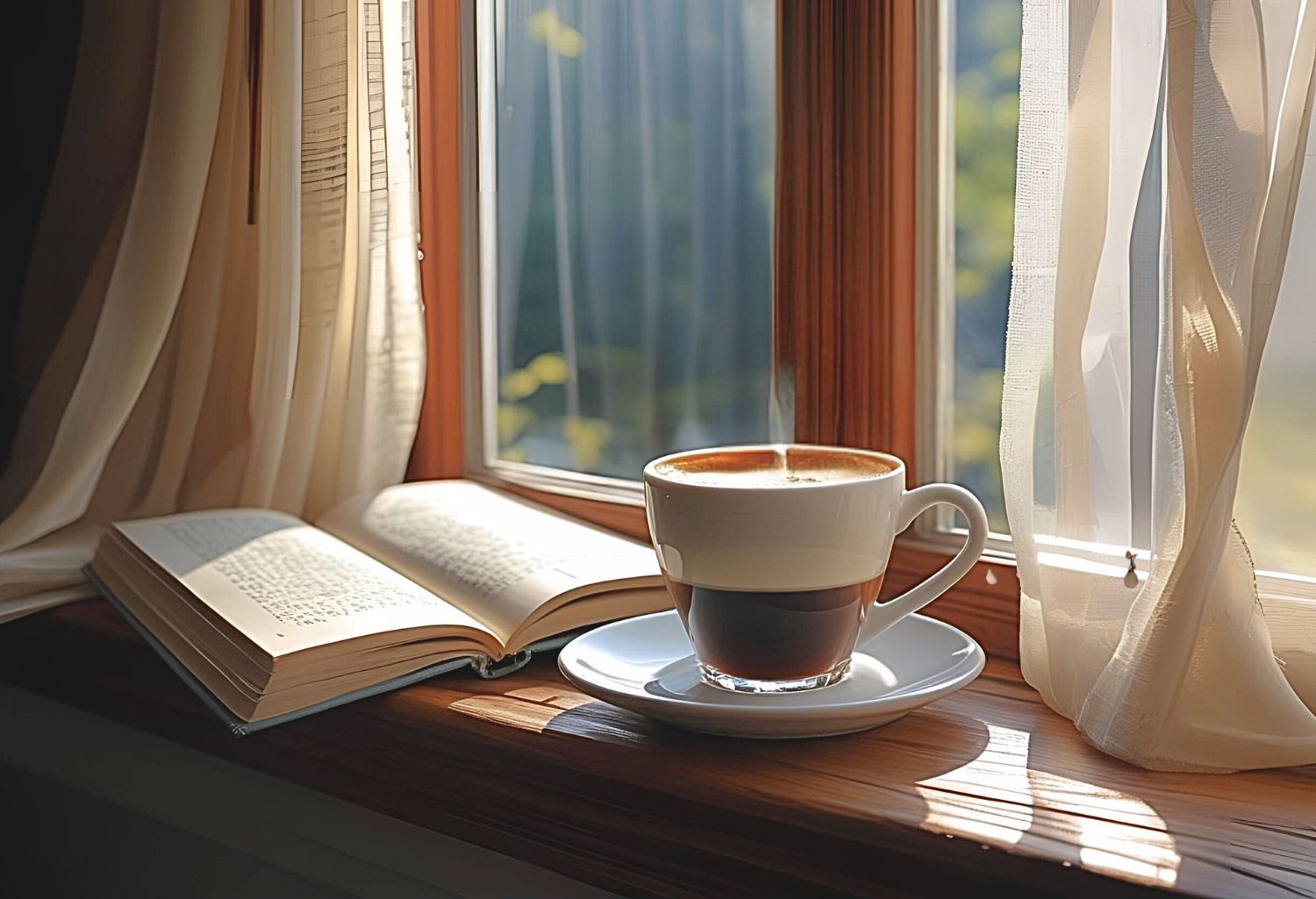
If I had to describe what slow living feels like, it’s that moment when you’re having coffee at home, barefoot, windows open, and the electric fan humming softly. There’s no rush to finish the coffee. The chores can wait a little. You’re not trying to win the morning; you’re just in it. Breathing. Awake. Grateful.
Many of us grew up in a society that often claps louder for speed: for overnight success, for fast tracking your career, for checking off more things than your calendar has space for. But somewhere in between all that chasing, a lot of us began to wonder:
Is this how it’s supposed to feel?
Because it’s not just exhaustion. It’s that nagging feeling that something’s off. That even when you finally get the thing – the title, the trip, the phone, the followers – you’re still left feeling like you missed something.
That’s where slow living comes in. Not as a trend, not as an aesthetic. But as a quiet return to what matters.
What is slow living?
At its heart, slow living is paying attention.
It’s choosing to be present in the life you already have. It’s not necessarily about slowing down in everything. It’s about slowing into the moments that matter. Work can still be busy. Deadlines still exist. But you’re not always running on fumes.
You give yourself permission to pause, to breathe, to ask: “What do I want this to feel like?”
Because when life stops being about just surviving the day, and starts being about experiencing it, you move differently. You speak softer. You hold space for rest. You stop proving. You start living.
Common myths about slow living
A lot of people hear “slow living” and immediately imagine someone lounging in a field of lavender with no bills, no responsibilities, and a farm-to-table brunch every Sunday. That’s not the picture we’re painting here.
Let’s clear a few things up:
Myth 1: Slow living means your life is boring.
A full life doesn’t have to be loud. You don’t need noise to feel something. Some of the richest moments are quiet; the long hug after a tiring day, the first bite of something home-cooked, the kind of laugh that makes your shoulders drop. Slow means deliberate, not dull.
Myth 2: Slow living means moving to the mountains without signal.
Sure, disconnecting can help. But you don’t need to vanish and live off-grid in Sagada to reset. Slow living can happen in Makati traffic, at your desk in Cebu, or in a walk-up studio overlooking SLEX. What matters isn’t your ZIP code; it’s your inner rhythm. It’s learning to anchor, even in chaos.
READ: Mindfulness for Every Juan: A Guide to Being Present
Myth 3: Slow living is for rich people.
It may sound like slow living is associated with privilege because rest often feels earned. But even your lola knew slow living before it had a name; walis tambo in hand, radio playing, stretching the budget and the morning in equal measure.
You don’t need a teakwood meditation bench or designer coffee bar. A calm moment with 3-in-1 coffee and silence can be just as sacred. Living slow is not about what you own. It’s about how you honor what you already have.
Myth 4: Slow living means all-organic everything.
That green smoothie trend looks nice, but so does champorado on a rainy day. You don’t need linen outfits, hand-poured candles or the perfect pantry to feel grounded. If you’re eating your breakfast without doomscrolling, that’s already slow living. It’s the intention that counts; no need to “aesthetic” your peace.
Myth 5: Slow living means abandoning your goals.
Goals still exist. They’re just more aligned now. You’re still building. Still dreaming. But the engine behind it isn’t pressure or panic. It’s clarity. It’s not giving up your ambition, it’s making sure you don’t lose yourself while chasing it
So… what does living slow actually look like?
It’s one thing to want a calmer life, it’s another to live it. We’re used to a world that rewards hustle and makes rest feel like a guilty pleasure, that slow living can feel almost unnatural at first. Being “masipag” (hardworking) is praised and being still is often misunderstood.
But it doesn’t have to be complicated.
Here are ten ways to practice slow living by showing up for it a little more each day.
10 ways to embrace the art of slow living
Intentional living begins with your attention; how you spend it, protect it, and bring it back to the present. These aren’t hard rules. They’re reminders. Ways to come home to yourself, even when life feels loud.
1. Know yourself beyond the surface.
We all say we want peace. But what does peace really look like for you? Not the version you see online. Not what you think you should want. But your own quiet version; the kind where your gut softens, your breath slows, and you don’t feel like you’re fighting the day just to survive it.
Getting there takes honesty. It asks you to look at your life and really see what fills you, what drains you, what makes you feel like yourself again.
READ: Everyday Practices to Feel More Alive Again
You need to know where you stand, so you can start walking in the direction that feels true.
2. Let vulnerability breathe.
We’re all carrying something. Sometimes more than we even realize. Old hurts, quiet fears, stories that replay in the background. Sometimes it’s pressure we got used to. Slow living gives you space to check in with yourself, to sit with the mess instead of covering it up. You’re not meant to feel okay all the time. You’re meant to feel honest. That’s how healing begins: not with fixing, but with facing.
3. Take responsibility for your energy.
There’s a certain peace that comes when you stop outsourcing your sense of calm. The people around you can add joy to your day, but they’re not in charge of your inner world. People will inspire you, disappoint you, surprise you; but how you respond is still your call. Your reactions, your choices, the pace you keep… that’s all you.
Living slow means making room between what happens and what you do next. When you move with intention, you begin to feel less tossed around by life and more anchored in it.
4. Unsubscribe from trends that don’t align.
You don’t need to try everything to know what’s right for you. Not every productivity hack is for you. Not every self-care ritual fits your season. Let go of the pressure to keep up. Slow living is not a show. If something doesn’t land, let it pass. No need to perform peace. Let it be quiet and true.
READ: How I Hold Onto Happiness (Even When Burnt Out or Sunburnt)
5. Protect your peace.
There’s a kind of strength in choosing not to engage. Not every comment deserves your reply. Not every invite deserves your yes. Some arguments aren’t worth the heat. Some people will misunderstand you anyway.
Save your energy for what truly nourishes you: the quiet joys, the warm company, the spaces where you don’t have to shrink or explain. There is beauty in knowing when to lean in, and when to quietly walk away.
6. Be real. Even when it’s not flattering.
Living slow is living honestly. You don’t need to curate your feelings. This means naming the emotions instead of stuffing them. It means choosing work that doesn’t just sound good but feels good. You’re allowed to be in-process. Some days you’ll feel grounded, other days you’ll spiral a bit. Both are okay.
What matters is that you’re not pretending. It’s a life where you drop the script and don’t have to fake being okay. You just are—messy, kind, learning, real.
7. Be fully present when it matters.
Because you’ve learned how to rest, you now have more to give: to your work, your friends, your home. Wherever you are, be there. Showing up fully doesn’t mean showing up perfect, just present. It means you arrive; heart open, phone down, soul intact and honoring what’s in front of you.
READ: Live With Intent: 6 Reminders for a Fuller Life
8. Respond, don’t react.
Life won’t stop throwing curveballs. You’ll still face pressure. Traffic will still test you. People will still be people. But now, you breathe first. Not everything is urgent. Not every tension is a fire to put out.
You take your time before you speak. You listen first and ask yourself what’s needed, not just what’s fastest. This doesn’t make you weak. It makes you wise.
9. Create room by letting go.
You’re not for everyone. And that’s okay. Some chapters will close. Some friendships won’t feel the same. Outgrowing something doesn’t have to be dramatic, it just has to be honest.
By letting go, you’re giving new people, new habits, new joy a chance to come in. Life is always moving; let it move with you.
READ: Is This It? The Silent Panic of Finding Your Way
10. Stay mindful.
Every moment is a chance to notice. The steam from your cup. The beat of your favorite song. The quiet miracle of being alive today. Awareness is a habit. It’s how you return to now. And the more you return, the more you realize, this moment is enough.
Slow living is a practice
It’s a quiet rebellion against the belief that rushing means winning.
Slow living is not a schedule. It’s not waking up at 4 AM and ticking off 7 habits before sunrise. It’s not about having less for the sake of less. It’s not even about moving to the province, learning how to bake sourdough, and calling it a day.
Start where you are.
Maybe it’s choosing not to scroll during lunch today, so you can actually enjoy your food.
Maybe it’s lighting that candle you’ve been saving for a ‘special day.’ Today is as special as any.
Maybe it’s texting a friend back when your gut says you miss them, not when your schedule clears.
READ: The Problem with Low-Maintenance Friendships: Are We Just Avoiding Effort?
It won’t always feel easy. But it will always feel worth it.
At the end of the day, you’re not racing. You’re arriving (again and again) to a life that feels a little more like you. Buhay mo ’to. Hindi mo kailangang laging magmadali para masabing magaling ka na.
Sometimes, success looks like ‘yung alam mong kalmado ka and still, you’re moving forward.
So breathe. Rest a while. You’re doing just fine.
Slow is not less. Slow is aware.


